


LeRobot
by Community
🤗 LeRobot: Making AI for Robotics more accessible with end-to-end learning
OSS
LeRobot
Added 1 June 2026
Overview
LeRobot is an open-source framework from Hugging Face for training robotic systems using end-to-end learning. It provides pre-built models, datasets, and training pipelines to reduce the barrier to entry for robotics AI development. The framework handles data collection, model training, and deployment workflows in Python.
Best for
Best for
Researchers and engineers building robot learning systems who want accessible tooling and pre-trained baselines.
Use cases
- Training vision-based robot control policies from demonstration data
- Benchmarking robotic learning approaches across standardized tasks
- Prototyping robot behaviors without building training infrastructure from scratch
Notes
LeRobot is an open-source framework from Hugging Face for training robotic systems using end-to-end learning. It provides pre-built models, datasets, and training pipelines to reduce the barrier to entry for robotics AI development. The framework handles data collection, model training, and deployment workflows in Python.
24,565 stars on GitHub. Last updated 2026-06-01. Licensed Apache-2.0.
Use cases
- Training vision-based robot control policies from demonstration data
- Benchmarking robotic learning approaches across standardized tasks
- Prototyping robot behaviors without building training infrastructure from scratch
Pros
- Backed by Hugging Face with active community support and 24k+ GitHub stars
- End-to-end learning approach reduces manual feature engineering for robot tasks
- Includes pre-trained models and public datasets to accelerate experimentation
Cons
- Requires Python expertise and familiarity with PyTorch or similar frameworks
- Limited to simulation or controlled environments for initial training
- Real-world deployment still requires domain-specific hardware integration and safety validation
Indexed from awesome-llmops and enriched against its public facts.
Pros
- Backed by Hugging Face with active community support and 24k+ GitHub stars
- End-to-end learning approach reduces manual feature engineering for robot tasks
- Includes pre-trained models and public datasets to accelerate experimentation
Cons
- Requires Python expertise and familiarity with PyTorch or similar frameworks
- Limited to simulation or controlled environments for initial training
- Real-world deployment still requires domain-specific hardware integration and safety validation
Open-source & AI alternatives
Swap-in tools that solve the same job. Weigh the trade-offs before you commit.

Octo
Community
Octo is a transformer-based robot policy trained on a diverse mix of 800k robot trajectories.
OpenPI
Community
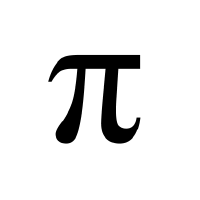
Open-source VLA models from Physical Intelligence, including π₀ and π₀.5 — flow-based vision-language-action models pretrained on large-scale robot data with fine-tuning support.
SmolVLA
Community
We’re on a journey to advance and democratize artificial intelligence through open source and open science.
Pairs with
Other entries in the index that connect to this one. Click through to see the chain.


DiVLA
Community
A continuous diffusion-based Vision-Language-Action model that integrates diffusion policies into autoregressive VLMs for robust and precise continuous robotic control.
OpenVLA
Community
OpenVLA: An open-source vision-language-action model for robotic manipulation.
Get the free Developer’s Field Guide
A 27-page field guide to the AI coding workflow with Claude. Claude Code, MCP servers, the prompt patterns that work, and what to delegate. Free.
Enter your work email. We send it straight over, plus a few short notes worth knowing. Unsubscribe any time.